
The Power of Reference: How We Point, Prove, and Preserve Meaning

What “Reference” Really Means
At its core, a reference is a connection: one thing indicates, invokes, or relies on another. When you use a pronoun like “it,” you reference something previously mentioned. When you cite a journal article, you reference a source to support a claim. When software “references” a file or object, it points to a location in memory or storage rather than duplicating the data.
Because reference is about linking, it is both a practical tool and a deep concept. It helps people share meaning efficiently, helps researchers establish credibility, and helps systems maintain consistency.
Reference in Everyday Language
Human communication would be painfully repetitive without reference. We constantly refer back to shared context—previous statements, shared experiences, or common knowledge—so that we can speak quickly and be understood.
Common linguistic reference types
- Anaphora: referring back to something already mentioned. Example: “Maria bought a book. She started reading it.”
- Cataphora: referring forward to something that appears later. Example: “When he arrived, the teacher began class.”
- Deixis: referring using situational context. Words like “this,” “that,” “here,” and “there” depend on a speaker’s perspective.
These forms are more than grammar tricks: they show that reference often depends on shared context. Misunderstandings occur when context is missing (“Who is ‘she’?”) or when multiple candidates exist (“Did ‘they’ mean the managers or the staff?”).
Reference as Evidence in Writing and Research
In academic, journalistic, and professional writing, references do more than point; they justify. A claim becomes stronger when it is traceable to reliable evidence. This is why citations, bibliographies, and footnotes are foundational in serious writing.
Why references matter for credibility
- Verifiability: Readers can check whether a statement is accurate and fairly represented.
- Transparency: Sources reveal what data, methods, or perspectives shaped the argument.
- Attribution: Referencing acknowledges prior work and reduces plagiarism.
- Depth: Strong references allow readers to explore the topic further.
Good referencing is not about overwhelming readers with citations; it is about choosing the right support. A single authoritative source can be more persuasive than a long list of weak ones.
Reference Systems: How We Organize Knowledge
Beyond individual citations, societies build entire reference systems to make information findable. Libraries use classification and cataloging; legal systems rely on precedents and citations; medicine uses standardized terminologies and guidelines. Even maps, indexes, and glossaries function as reference tools.
Key features of effective reference systems
- Consistency: Clear rules for naming, formatting, and organizing entries.
- Retrievability: A way to locate items quickly (indexes, search, identifiers like ISBNs or DOIs).
- Interlinking: Cross-references that connect related concepts (e.g., “see also”).
- Authority control: Preventing ambiguity (for example, distinguishing between two authors with similar names).
When these features are missing, people waste time, misattribute information, or fail to locate critical context—problems that scale dramatically in large organizations.
Reference in Technology and Computing
In computing, the word “reference” commonly describes a pointer-like relationship: a variable or handle that refers to data stored elsewhere. This idea enables efficiency and shared access—rather than copying a large structure, you reference it.
Where references show up in software
- Programming languages: References (or pointers) allow functions to work with the same underlying object, enabling mutation and shared state.
- Databases: Foreign keys reference primary keys to relate records without duplication.
- Web and documents: Hyperlinks reference other pages, sections, or resources, creating navigable networks of information.
- APIs and schemas: One definition can be referenced repeatedly to ensure consistency across systems.
References in technology also introduce risks: a broken link, a deleted file, or a changed schema can create “dangling references.” In programming, improper handling of references can cause bugs such as unintended side effects, memory leaks, or confusing shared-state behavior.
Reference vs. Mention: A Useful Distinction
Not every mention is a reference in the strict sense. A reference is typically intended to connect to a specific target. For example, saying “Einstein” might be a mention. Saying “Einstein’s 1905 paper on special relativity” is a more precise reference because it points to a particular work and context.
This distinction becomes crucial in research and knowledge management. Vague references (“studies show”) weaken trust because they lack a clear target. Precise references empower readers to verify and interpret.
Common Pitfalls and How to Avoid Them
References can fail when they are unclear, unreliable, or incomplete. Whether you are writing an article, building a knowledge base, or designing software, the same principle applies: a reference is only as good as its ability to consistently lead others to the intended target.
Frequent issues
- Ambiguity: Multiple possible targets (e.g., unclear pronouns or incomplete citations).
- Link rot: URLs change or disappear, breaking web references.
- Misquotation or context loss: A source is cited but its meaning is distorted.
- Overreliance on weak sources: References to non-authoritative material undermine credibility.
Practical improvements
- Be specific: Include identifying details—author, title, date, version, and locator (page, section, DOI).
- Prefer stable identifiers: DOIs, permalinks, archived links, and versioned documentation.
- Quote responsibly: Represent the source’s claim and scope accurately.
- Maintain the chain: Ensure references remain valid as content evolves (change logs, redirects, link checks).
Why Reference Is a Quiet Foundation of Trust
Reference is easy to overlook because it is usually invisible when it works. Yet it underpins how people coordinate understanding, how institutions maintain records, and how modern information systems stay coherent. In conversation, reference prevents repetition. In scholarship, it separates opinion from supported argument. In technology, it enables modularity and shared structure.
Ultimately, reference is not just a technical detail—it is a method for preserving meaning across time, distance, and complexity. When references are clear and durable, knowledge becomes easier to verify, reuse, and build upon.
Listings Related to the Article: The Power of Reference: How We Point, Prove, and Preserve Meaning
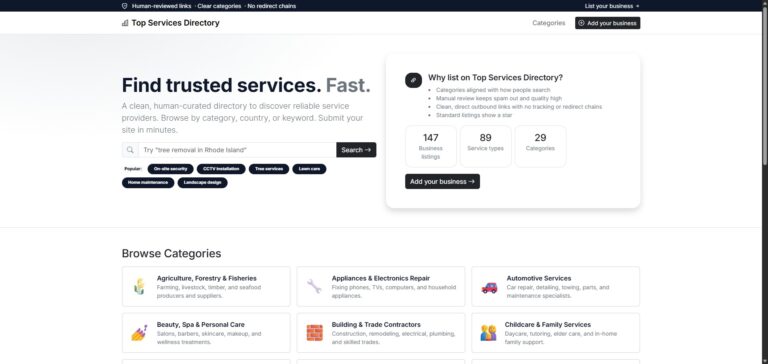
Top Services Directory
Top Services Directory is the home of trusted services. Each listing includes clear details, accurate categories, and location info, with an optional verification badge after a quick check to signal credibility. Customers find dependable providers faster, and businesses build trust and expand their reach.
- Category
- Reference » Directories

West Bloomfield Tree Service & Removal
West Bloomfield Tree Service & Removal helps maintain healthy trees and safe landscapes with expert care. Using professional equipment and experienced crews, they deliver reliable tree trimming, pruning, and removal services you can trust.
- Category
- Home » Gardening » Landscaping
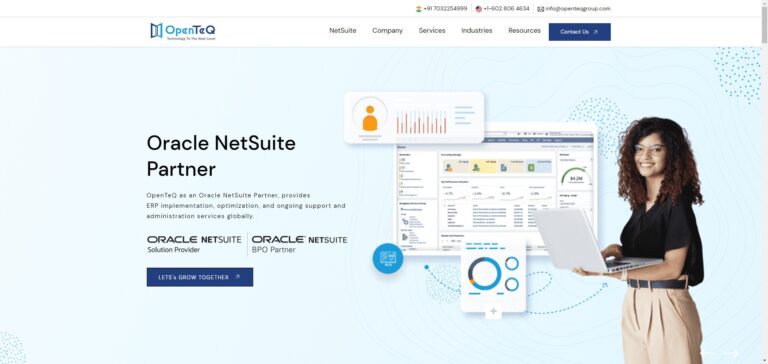
OpenTeQ
OpenTeQ is a proficient software development firm with a worldwide presence and extensive proficiency in providing customized software development services and technology solutions.
- Category
- Computers » Companies » Software Development
More Articles Like: The Power of Reference: How We Point, Prove, and Preserve Meaning

Supercomputing Explained: How Extreme Computing Power Solves the World’s Hardest Problems
Supercomputing combines massive parallel processing, advanced architectures, and high-speed networking to tackle calculations far beyond the reach of ordinary machines. From climate modeling to drug discovery, these systems are essential tools for modern science, industry, and national research.

News | Headline Links: How Modern Readers Navigate the World One Click at a Time
Headline links are the gateways through which most people discover, judge, and share news online. Understanding how they work reveals a great deal about digital journalism, reader behavior, and the economics of attention.

Beyond the Screen: How Computers Think, Work, and Shape Modern Life
Computers are programmable machines that process data into meaningful results, powering everything from personal productivity to global infrastructure. This article explains how they work, the types you encounter, and the key concepts shaping their future.