
The Tapestry of Society: Weaving Connections and Cultures

Introduction
Society is an intricate tapestry, woven together with diverse cultures, beliefs, practices, and social constructs. Understanding society entails exploring the patterns and structures that define the human experience in various contexts. This article delves into the complexities of society, its dynamics, and its impact on individuals and groups.
Defining Society
A Collective of Individuals
Society can be defined as a group of individuals involved in continuous social interaction, or a large social group sharing the same geographical or social territory, typically under the same political authority and cultural expectations. Fundamentally, society is about human relationships and the ways they manifest within communities.
Cultural and Social Structures
A society encompasses a set of cultural and social structures, institutions, and processes that maintain social order and cohesion. These structures include family, education, religion, and economic and political systems. They are crucial for sustaining the society and shaping individuals’ roles and relationships.
The Fabric of Cultural Identity
The Elements of Culture
Culture forms the core of society, influencing beliefs, values, and customs that define a group of people. It includes:
- Language: A key medium of communication, enabling members to express ideas and concepts.
- Symbols: Objects or activities bearing particular meanings recognized by the culture.
- Norms: Established rules of behavior or conduct, guiding members in daily interactions.
- Values: Deeply held standards of what is right, important, and desirable within the society.
- Customs: Traditional and habitual practices passed through generations.
Preserving Cultural Heritage
Societies aim to preserve their cultural heritage by transmitting cultural knowledge and practices from one generation to another. Festivals, rituals, and educational systems play a crucial role in sustaining cultural identity amidst globalization challenges.
Social Institutions and Their Roles
The Family: Foundation of Society
The family is often viewed as the primary unit of socialization, responsible for raising children, instilling cultural values, and contributing to the workforce. Different family structures exist across societies, ranging from nuclear to extended families, each influencing society in unique ways.
Education: A Pillar of Intellectual Growth
Education serves as the beacon of knowledge and empowerment, enabling individuals to contribute to socioeconomic development. It promotes critical thinking, innovation, and the acquisition of skills necessary for surviving and thriving in a modern society.
Economic Systems: Sustaining Livelihoods
Economic systems manage the production, distribution, and consumption of goods and services within a society. These systems vary from capitalism and socialism to mixed economies, each influencing how resources are allocated and wealth is distributed.
Societal Challenges and Adaptations
Globalization and Cultural Homogenization
Globalization has significantly impacted societies, promoting cultural exchange and economic integration. However, it also poses challenges like cultural homogenization, which can threaten the unique identity of societies.
Social Inequality
Inequality remains a pressing issue, influenced by factors such as race, gender, and socioeconomic status. Societies are continually striving to address these disparities through policy changes and social reforms.
Technological Advancements
Technology shapes and transforms societal functions, influencing communication, work, and social interactions. While it offers numerous benefits, it also brings challenges like privacy concerns and job displacement.
Conclusion
Society is a dynamic and multifaceted entity, evolving through continuous interactions and adaptations. Understanding its components—from cultural identity to social institutions—enriches our comprehension of what it means to belong to and contribute to society. As we face future challenges, embracing diversity, promoting equity, and fostering innovation will be key to nurturing a resilient and cohesive global society.
Listings Related to the Article: The Tapestry of Society: Weaving Connections and Cultures
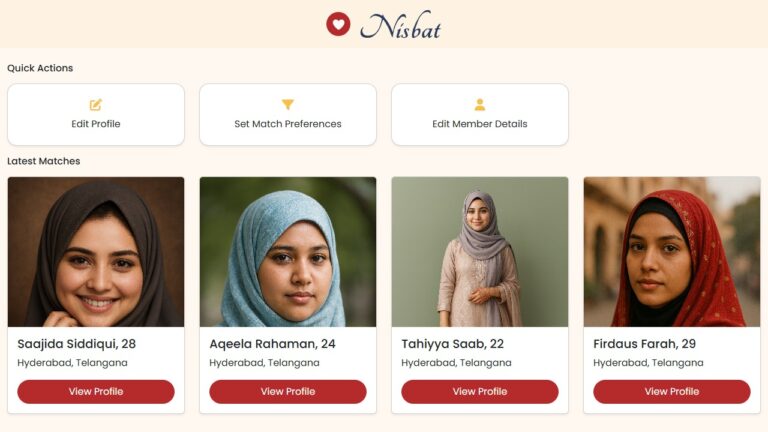
Muslim Marriage App India
Nisbat Muslim Marriage App India helps Muslim families and individuals across India find the right partner for marriage. With a focus on cultural values, trust, and long-term commitment, Nisbat provides a respectful way to connect with suitable matches. Whether you are a parent searching for your son or daughter or an individual looking for a life partner, this app makes the process simple and meaningful.

Valkyrie Funds
Valkyrie Funds stands as a prominent financial services firm, uniquely positioned at the convergence of traditional finance and the rapidly evolving digital asset sector. Headquartered in Nashville, our dedicated team seamlessly merges profound technical know-how in blockchain technologies with a proven track record of launching successful investment vehicles within conventional markets.
- Category
- Business » Investing » Cryptocurrencies
More Articles Like: The Tapestry of Society: Weaving Connections and Cultures

Law in Everyday Life: How Rules Shape Society and Social Change
Law is more than a system of rules enforced by courts; it is a social institution that reflects values, resolves conflicts, and guides collective life. Understanding the relationship between society and law reveals how rights, duties, and justice evolve over time.

Why Higher Education News Matters More Than Ever
News about colleges and universities shapes how students, families, educators, and policymakers understand the future of higher education. From tuition and technology to research and campus life, the sector remains a critical barometer of social and economic change.

The Living Architecture of Society: How We Build, Belong, and Change Together
Society is more than a population living side by side—it is a living system of relationships, rules, institutions, and shared meanings. This article explores how societies form, how they hold together, and how they evolve under pressure and possibility.