
The Living Architecture of Society: How We Build, Belong, and Change Together

What Society Is (and What It Isn’t)
At its simplest, society refers to a group of people who live in association with one another. But that definition is only the doorway. Society is not merely a crowd or a geographic cluster; it is a patterned web of relationships and expectations that shapes how people behave, cooperate, compete, and imagine their place in the world.
A society emerges when people share more than space: they share systems—norms, laws, institutions, and narratives—that organize daily life. These systems can be explicit, such as legal codes, or implicit, such as unwritten rules about politeness or status. Society is therefore both structure (the “architecture” of rules and institutions) and process (the ongoing negotiations that keep that architecture standing or remodel it over time).
The Building Blocks: Norms, Values, and Culture
Every society rests on a cultural foundation that tells people what is considered normal, admirable, shameful, or forbidden. Culture is not limited to art, food, or festivals; it includes shared meanings that guide choices in families, workplaces, schools, and politics.
Norms and Values
Values are broad ideals a society prizes—such as freedom, equality, respect for elders, or religious devotion. Norms are the everyday rules that translate values into behavior. A society that values community may have norms about mutual aid, hospitality, or collective decision-making. A society that values individual autonomy may normalize privacy and personal choice.
Norms are powerful because they often operate without formal enforcement. People follow them to gain acceptance, avoid criticism, or because they internalize them as “the right way” to live. When norms change—around gender roles, parenting, or work-life boundaries—society changes not only in policy but in the texture of daily interactions.
Symbols and Shared Stories
Societies rely on symbols (flags, languages, rituals) and shared stories (national histories, religious traditions, origin myths) that provide a sense of collective identity. These narratives can unite diverse groups, but they can also exclude those whose experiences are ignored or misrepresented. Debates over textbooks, monuments, and public holidays are often debates over which story society tells about itself.
Institutions: The Skeleton of Social Life
Institutions are enduring systems organized around major needs: education, governance, economy, family, religion, healthcare, and media. They stabilize society by setting roles and procedures—teacher and student, employer and employee, citizen and official—so people can coordinate expectations even with strangers.
Institutions do more than provide services; they distribute opportunities and burdens. Access to quality schooling, fair courts, safe housing, and dignified work shapes who can flourish. When institutions are trusted, people are more willing to cooperate and accept compromises. When institutions are seen as corrupt or biased, social cohesion weakens and conflict becomes more likely.
- Family and kinship organize care, socialization, and emotional support, while also transmitting culture and status.
- Education passes on knowledge and skills, but also teaches discipline, social norms, and civic identity.
- Economy coordinates production and exchange, shaping class structures and life chances.
- Government and law define rights, responsibilities, and legitimate authority, ideally balancing order with justice.
- Media and communication influence public attention and shared realities, affecting trust, polarization, and collective action.
Social Bonds: Belonging, Identity, and Inequality
Society is experienced through belonging. People form identities based on family, neighborhood, profession, religion, ethnicity, nationality, or online communities. These identities can provide meaning and resilience, especially in times of uncertainty. Yet identity can also become a boundary line that turns difference into division.
Social Roles and Status
Societies assign roles—parent, student, manager, caregiver—with attached expectations. Status, whether earned or inherited, influences how people are treated. Some societies emphasize hierarchy and deference; others promote egalitarian ideals, even if inequalities persist in practice.
Inequality as a Social Pattern
Inequality is not only about income. It can include access to education, healthcare, political voice, safety, and social respect. These differences tend to become self-reinforcing: wealth can buy better schooling, which leads to better jobs, which increases influence and opportunity. Social movements often emerge where people recognize that personal struggles reflect collective patterns—and that those patterns can be changed.
Change and Conflict: How Societies Evolve
Societies are never finished products. They evolve through demographic shifts, migration, technological innovation, environmental pressures, and ideological change. Conflict is not always a sign of breakdown; it can be the mechanism by which societies renegotiate norms and expand rights. Disagreements over labor conditions, civil liberties, or cultural recognition often reveal deeper questions: Who belongs? Who decides? Whose needs matter most?
Technology has accelerated social change by altering how people work, communicate, and organize. Social media can amplify marginalized voices and spread information quickly, but it can also intensify misinformation and polarization. Meanwhile, global interdependence means societies increasingly face shared challenges—pandemics, climate change, supply-chain shocks—that no single nation can solve alone.
What Makes a Society Healthy?
A “healthy” society is not one without conflict; it is one with fair processes for resolving conflict and distributing resources. Social health involves both material conditions and moral commitments. People need food, shelter, safety, and healthcare, but they also need dignity, voice, and a sense that the rules apply consistently.
- Trust and legitimacy: Institutions function better when people believe they are accountable and fair.
- Social cohesion: A shared sense of “we” that does not erase differences or silence dissent.
- Opportunity and mobility: Pathways for people to improve their lives without insurmountable barriers.
- Rights and responsibilities: Protections for individuals paired with expectations of civic participation and care for others.
- Adaptability: The capacity to reform laws, norms, and systems as conditions change.
Society as a Collective Project
Society is often spoken about as if it were an external force—something that happens to people. In reality, society is a collective project, built and rebuilt through everyday actions: how we treat strangers, how we vote or abstain, how workplaces distribute respect, how schools include or exclude, how communities respond to need.
Understanding society means seeing both the visible structures—laws, markets, institutions—and the invisible ones—beliefs, norms, and shared meanings. It also means recognizing that while individuals do not choose the conditions they are born into, people and groups can reshape those conditions through cooperation, critique, and imagination. Society is the living architecture of human life: sturdy enough to hold us, flexible enough to change, and always under construction.
Listings Related to the Article: The Living Architecture of Society: How We Build, Belong, and Change Together
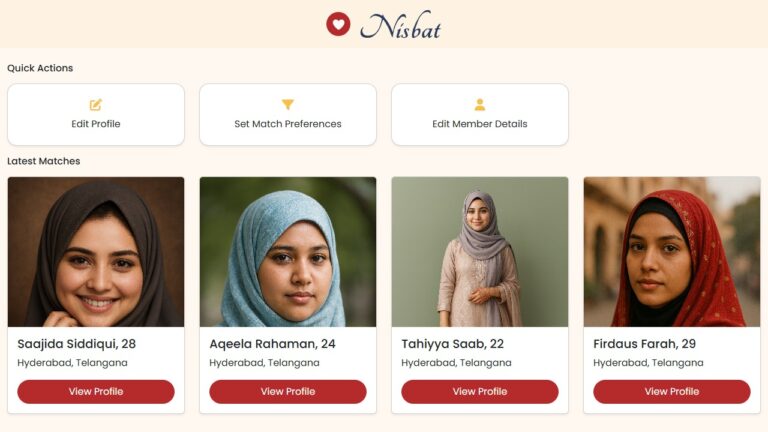
Muslim Marriage App India
Nisbat Muslim Marriage App India helps Muslim families and individuals across India find the right partner for marriage. With a focus on cultural values, trust, and long-term commitment, Nisbat provides a respectful way to connect with suitable matches. Whether you are a parent searching for your son or daughter or an individual looking for a life partner, this app makes the process simple and meaningful.
More Articles Like: The Living Architecture of Society: How We Build, Belong, and Change Together

Law in Everyday Life: How Rules Shape Society and Social Change
Law is more than a system of rules enforced by courts; it is a social institution that reflects values, resolves conflicts, and guides collective life. Understanding the relationship between society and law reveals how rights, duties, and justice evolve over time.

Beyond the Scoreboard: How Sports Shape Bodies, Minds, and Communities
Sports are far more than games played for entertainment. They build physical fitness, mental resilience, teamwork, and social connection while influencing culture, education, and community identity.

The Living Web: How Society Holds Together, Changes, and Remakes Us
Society is more than a crowd—it is a shared framework of relationships, institutions, and cultural rules that shapes how people live together. This article explores what society is, how it forms, what maintains it, and how it evolves under pressure and innovation.