
The Living Web: How Society Holds Together, Changes, and Remakes Us

What Society Is (and What It Isn’t)
Society is the organized pattern of human life that emerges when people share space, interact repeatedly, and develop common rules for cooperation and conflict. It includes relationships between individuals and groups, the institutions that coordinate life (such as families, schools, markets, governments, and media), and the cultural meanings that help people interpret the world. Society is not simply “people in one place.” A crowd at a concert may be temporary; a society has continuity—norms, expectations, and structures that endure over time and shape behavior even when no one is watching.
Because society is both practical and symbolic, it operates at multiple levels at once: the intimate level of everyday life, and the large-scale level of laws, economies, and political power. Understanding society requires seeing how these levels connect—how a household decision can be influenced by national policy, and how cultural trends can reshape what individuals believe is possible.
The Building Blocks of Society
Shared Norms and Values
Norms are the unwritten rules that guide behavior: how to greet others, what counts as polite, when to speak up, and how to show respect. Values are the deeper ideals that norms reflect, such as fairness, freedom, loyalty, or tradition. Together, norms and values reduce uncertainty. They help people anticipate how others will act, which makes cooperation easier and conflict more manageable.
Institutions and Roles
Institutions are stable arrangements designed to meet recurring social needs. Education transmits knowledge and social skills; legal systems define rights and penalties; economic systems organize production and exchange; healthcare tries to maintain well-being. Within these institutions, individuals occupy roles—student, parent, employee, citizen—each with expected behaviors. Roles simplify social life by providing scripts for interaction, but they can also create pressure when expectations are rigid or unequal.
Social Groups and Networks
People live in overlapping circles: families, friendship groups, neighborhoods, religious communities, professional associations, online communities, and more. These networks provide identity and support, but they also transmit information, shape opinions, and influence opportunities. Access to helpful networks—mentors, job referrals, community resources—often determines who can move upward and who remains excluded.
How Society Maintains Order
Social order doesn’t rely only on police or formal rules. It is sustained through a mix of internal habits, mutual expectations, and institutional enforcement. Most people follow norms because they were taught them, because they believe in them, or because social consequences—approval or disapproval—matter.
- Socialization: From childhood onward, people learn language, manners, moral boundaries, and cultural meaning. Families, schools, peers, and media all participate in shaping what feels “normal.”
- Incentives and sanctions: Societies reward certain actions (prestige, promotions, trust) and discourage others (criticism, exclusion, legal punishment). These signals guide behavior without requiring constant force.
- Legitimacy: Rules are followed more reliably when institutions are seen as legitimate. When people believe a system is fair or at least predictable, they are more willing to cooperate—even when outcomes are imperfect.
Order, however, is not the same as justice. A society can be stable while still being unequal. Stability describes how predictable social life is; justice describes how power and resources are distributed and whether rights are protected.
Power, Inequality, and Social Stratification
Every society organizes power: who gets to make decisions, set rules, and define what counts as truth or “common sense.” Power shows up in obvious places like governments and corporations, but also in subtle forms—whose accents are judged as credible, whose neighborhoods receive investment, whose history is taught in schools, and whose suffering is recognized.
Inequality is often structured through stratification systems such as class, race or ethnicity, gender, caste, disability, citizenship status, and education. These categories are not only personal identities; they can become gateways or barriers to housing, healthcare, safety, and political representation. When inequalities persist across generations, they can harden into a social inheritance—advantages and disadvantages that accumulate over time.
Culture: The Meaning System of Society
Culture is the toolkit of meanings that makes social life intelligible. It includes language, rituals, traditions, art, religion, humor, and everyday assumptions about what is “appropriate.” Culture explains why the same action—direct eye contact, individual achievement, public disagreement—can be praised in one context and criticized in another.
Culture is also dynamic. New technologies, migration, and generational shifts continually reshape norms. Sometimes cultural change is gradual; other times it accelerates during crises, when old routines no longer solve new problems.
How Society Changes
Societies evolve through a blend of innovation and conflict. Change can begin with economic transformation, scientific breakthroughs, demographic shifts, or new political movements. It can be driven from the top down through policy, or from the bottom up through collective action.
Common Drivers of Social Change
- Technological change: Communication tools can reorganize work, relationships, and politics, creating new communities while also spreading misinformation faster.
- Economic change: Industrialization, globalization, and automation reshape jobs and class structures, altering what skills are valued.
- Political struggles: Expanding rights, challenging discrimination, and reforming institutions often require sustained activism and negotiation.
- Cultural shifts: New ideas about identity, family life, and morality can rewrite expectations and redefine belonging.
Periods of rapid change can feel destabilizing because norms lag behind reality. When institutions fail to adapt, social trust can erode—yet these moments also open the door for reforms that better reflect current needs.
Society in Everyday Life
Even ordinary routines reveal society’s influence. The way people queue, commute, date, work, and resolve disagreements reflects invisible agreements. At the same time, individuals are not passive products of society. People interpret norms, resist expectations, create subcultures, and build new institutions. Social life is therefore a continuous negotiation between structure (the patterns that constrain us) and agency (our capacity to choose and act).
In practice, strengthening society often means strengthening the conditions for cooperation: reliable information, fair rules, inclusive institutions, and opportunities for people to participate meaningfully in decisions that affect them.
Why Understanding Society Matters
Society shapes what people can imagine, what they can access, and what they consider acceptable. By studying society, we gain tools to explain why problems persist, why some solutions backfire, and how change can be made more humane and effective. Whether the issue is inequality, polarization, public health, or climate response, the underlying challenge is social: coordinating millions of lives under shared constraints while protecting dignity and difference. Seeing society clearly is the first step toward improving it.
Listings Related to the Article: The Living Web: How Society Holds Together, Changes, and Remakes Us
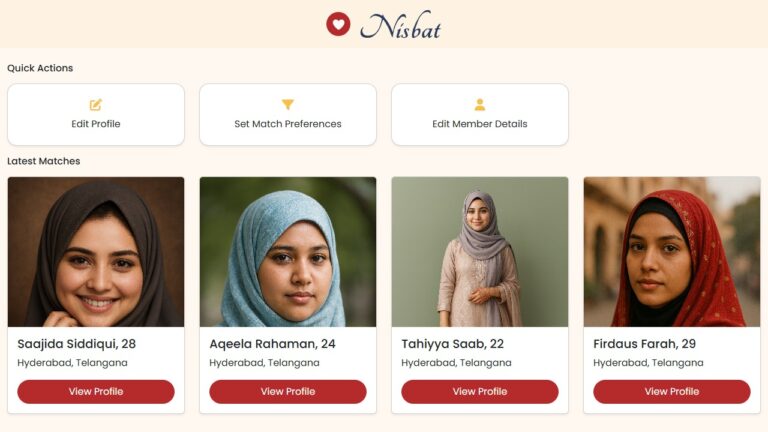
Muslim Marriage App India
Nisbat Muslim Marriage App India helps Muslim families and individuals across India find the right partner for marriage. With a focus on cultural values, trust, and long-term commitment, Nisbat provides a respectful way to connect with suitable matches. Whether you are a parent searching for your son or daughter or an individual looking for a life partner, this app makes the process simple and meaningful.

Contabo
Contabo stands out as a premier web hosting and cloud service provider, offering unparalleled computing power at an exceptionally competitive cost. With a commitment to customer satisfaction, Contabo provides award-winning support delivered by real people, not automated bots.
- Category
- Computers » Internet » Web Hosting
More Articles Like: The Living Web: How Society Holds Together, Changes, and Remakes Us

Law in Everyday Life: How Rules Shape Society and Social Change
Law is more than a system of rules enforced by courts; it is a social institution that reflects values, resolves conflicts, and guides collective life. Understanding the relationship between society and law reveals how rights, duties, and justice evolve over time.

Beyond the Scoreboard: How Sports Shape Bodies, Minds, and Communities
Sports are far more than games played for entertainment. They build physical fitness, mental resilience, teamwork, and social connection while influencing culture, education, and community identity.

The Living Architecture of Society: How We Build, Belong, and Change Together
Society is more than a population living side by side—it is a living system of relationships, rules, institutions, and shared meanings. This article explores how societies form, how they hold together, and how they evolve under pressure and possibility.