
Understanding Contractors in Construction and Maintenance
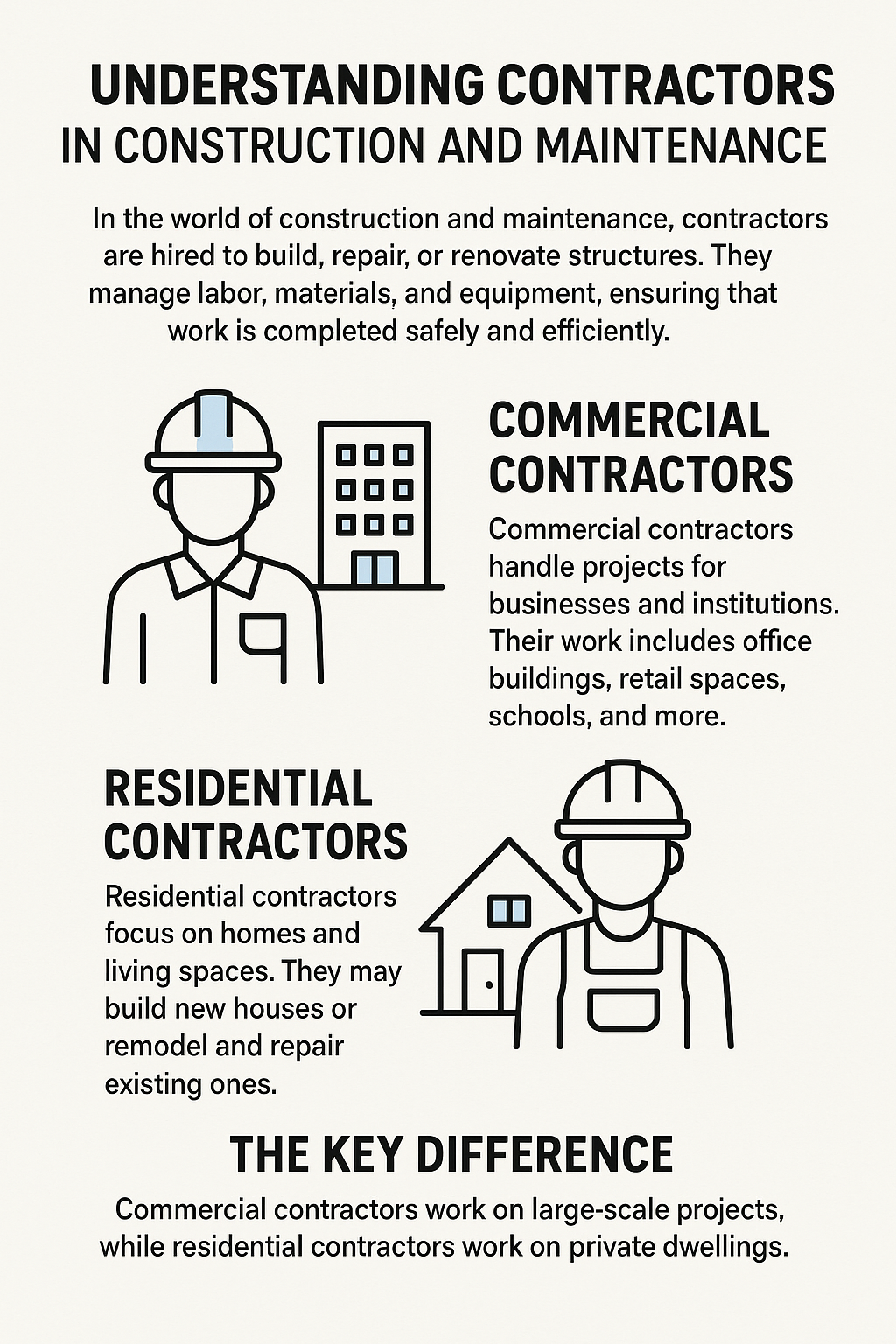
In the world of construction and maintenance, contractors play a central role in turning plans and designs into completed projects. A contractor is essentially a professional or a company hired to carry out specific tasks, ranging from building a home or office to repairing and maintaining existing structures. They coordinate labor, materials, equipment, and scheduling to ensure that work is done properly and within the agreed timeline.
Contractors may specialize in certain areas such as electrical work, plumbing, or roofing, while others take on larger roles as general contractors who oversee entire projects. Regardless of their specialty, their responsibility is to make sure the job is carried out according to codes, safety regulations, and client expectations.
Commercial Contractors
Commercial contractors focus on projects that serve businesses, institutions, and public facilities. This includes office buildings, retail spaces, schools, hospitals, factories, and warehouses. These projects often require knowledge of complex building systems such as large scale HVAC, elevators, and advanced fire safety measures. Commercial contractors must also be skilled at coordinating with architects, engineers, and regulatory bodies since projects of this size are subject to strict codes and oversight.
The work of commercial contractors tends to involve larger budgets, longer timelines, and more extensive teams. They are also expected to manage projects in a way that minimizes disruption to surrounding businesses and ensures long term durability.
Residential Contractors
Residential contractors, on the other hand, specialize in homes and living spaces. Their work ranges from building new houses to renovating kitchens, adding rooms, or handling repairs. Unlike commercial projects, residential work is more personal and directly tied to the lifestyle of the homeowner.
Residential contractors focus on comfort, aesthetics, and functionality for everyday living. While they also adhere to codes and safety standards, their projects are typically smaller in scale compared to commercial work. Communication with the homeowner is a critical part of the job, as contractors need to align their work with the preferences and budget of the family they are serving.
The Key Difference
The main difference between commercial and residential contractors lies in the type of structures they work on and the complexity of the projects. Commercial contractors manage large scale projects that often involve teams of specialists and compliance with a wide range of regulations. Residential contractors focus on creating or improving homes, where attention to detail, style, and personal needs often matter most.
Both types of contractors are essential in construction and maintenance. They provide the expertise and leadership needed to bring projects to life, whether it is a towering office building or a cozy family home.
Listings Related to the Article: Understanding Contractors in Construction and Maintenance

Daley Gas Group
Chester gas and heating services, including boiler repairs, servicing, installations, landlord checks, CP12 certificates, and leak detection.
- Category
- Home » Home Improvement » Climate Control

Rhode Island Gutter Service
Rhode Island Gutter Service specializes in maintaining efficient, long-lasting gutter systems for both residential and commercial properties. With dependable service and proven expertise, they provide protection and performance you can count on.

House Washing RI
Rhode Island Power Washing and Roof Cleaning enhances curb appeal with safe and reliable exterior cleaning services. We specialize in house washing, roof moss removal, and surface cleaning for residential and commercial properties throughout the state.
- Category
- Business » Business Services » Domestic Services
More Articles Like: Understanding Contractors in Construction and Maintenance

Supercomputing Explained: How Extreme Computing Power Solves the World’s Hardest Problems
Supercomputing combines massive parallel processing, advanced architectures, and high-speed networking to tackle calculations far beyond the reach of ordinary machines. From climate modeling to drug discovery, these systems are essential tools for modern science, industry, and national research.

How Health Organizations Shape Stronger Communities
Health organizations play a central role in protecting public well-being, expanding access to care, and responding to local and global health challenges. From hospitals to nonprofits and international agencies, these institutions help build healthier, more resilient communities.

Beyond the Screen: How Computers Think, Work, and Shape Modern Life
Computers are programmable machines that process data into meaningful results, powering everything from personal productivity to global infrastructure. This article explains how they work, the types you encounter, and the key concepts shaping their future.