
The Birth of the World Wide Web: A Glimpse into CERN’s First Website
The birthplace of the World Wide Web, a groundbreaking invention that has transformed the way we live, work, and communicate, is none other than CERN, the European Organization for Nuclear Research. In the early 1990s, a British scientist named Tim Berners-Lee and his team at CERN developed the very first website, laying the foundation for the internet as we know it today. In this article, we’ll take a closer look at the historic website that started it all: http://info.cern.ch/.
CERN and the World Wide Web
CERN, located in Geneva, Switzerland, is renowned for its pioneering research in particle physics and high-energy physics. It’s the home of the Large Hadron Collider (LHC), the world’s most powerful particle accelerator. However, it’s not just known for its scientific experiments; CERN is also famous for fostering innovation beyond the realm of physics.
In March 1989, Tim Berners-Lee, a software engineer working at CERN, proposed the concept of the World Wide Web. His vision was to create a system that would allow scientists to share information across different computers, bridging the gap between the various research groups at CERN. He outlined his idea in a document titled “Information Management: A Proposal,” which would later be dubbed the “World Wide Web” – a name that resonates around the globe today.
The First-Ever Website
To realize his vision, Berners-Lee needed to create the infrastructure for the World Wide Web, including a web browser, a web server, and a language for creating web pages. He invented HTML (Hypertext Markup Language) and HTTP (Hypertext Transfer Protocol) as the backbone of the web. These technologies allowed documents to be linked together via hyperlinks and made accessible through the internet.
The first-ever website, http://info.cern.ch/, was launched in 1991. Its purpose was to serve as an information portal for CERN’s internal users, helping them navigate the complex web of interconnected documents and databases at the organization. The website was incredibly simple by today’s standards, with a plain white background and text-based navigation.
Exploring the Historic Website
While the original website is no longer available at its original URL, CERN has preserved a copy of it to honor its historical significance. Visitors to http://info.cern.ch/ (or its archived version) are greeted with a sparse, text-heavy page reminiscent of the early days of the internet.
The homepage of the first website displayed a brief introduction to the World Wide Web, its purpose, and instructions on how to use it. It featured links to resources such as a guide to installing a web browser, information on web servers, and a list of Frequently Asked Questions (FAQs) about the web.
A glimpse at the source code of the website reveals its simplicity. The use of basic HTML tags for headings, paragraphs, and links is evident, with no fancy graphics or multimedia elements. It’s a stark contrast to today’s visually rich and interactive websites.
Legacy and Impact
The launch of http://info.cern.ch/ marked the beginning of a digital revolution that would go on to reshape the world. The World Wide Web rapidly expanded beyond CERN’s walls, connecting people, organizations, and information on a global scale. It fueled the rise of e-commerce, social media, online education, and countless other innovations that have become integral to modern life.
Tim Berners-Lee’s decision to make the World Wide Web an open and freely accessible platform was a pivotal moment in the history of technology. It democratized information and communication, enabling individuals and businesses worldwide to participate in the digital age. His commitment to an open and decentralized web has remained a guiding principle, advocating for net neutrality and online privacy.
Conclusion
The website http://info.cern.ch/ stands as a symbol of the birth of the World Wide Web and the transformative power of ideas. It reminds us of the remarkable journey from a simple information portal to the vast and interconnected digital landscape we navigate today. As we reflect on this historic website, we celebrate the spirit of innovation, collaboration, and openness that continue to drive the evolution of the internet.
Listings Related to the Article: The Birth of the World Wide Web: A Glimpse into CERN’s First Website
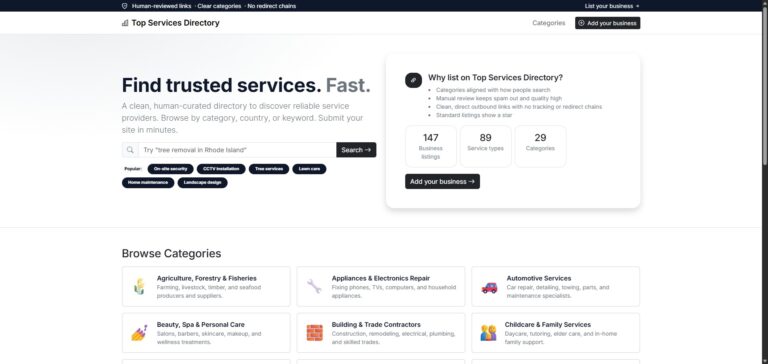
Top Services Directory
Top Services Directory is the home of trusted services. Each listing includes clear details, accurate categories, and location info, with an optional verification badge after a quick check to signal credibility. Customers find dependable providers faster, and businesses build trust and expand their reach.
- Category
- Reference » Directories
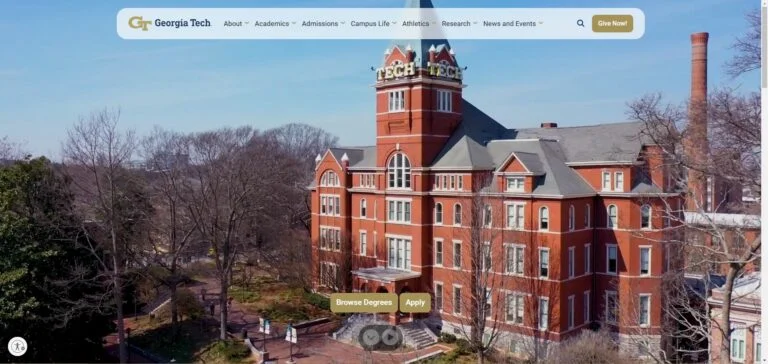
Georgia Institute of Technology
The Georgia Institute of Technology (Georgia Tech) is a leading public research university located in Atlanta, Georgia. Known for its innovative programs in engineering, computing, business, and design, Georgia Tech combines cutting-edge research with a commitment to hands-on learning. With a strong emphasis on technology and entrepreneurship, Georgia Tech prepares students to tackle global challenges and drive innovation across industries.
- Category
- Reference » Education » Colleges and Universities
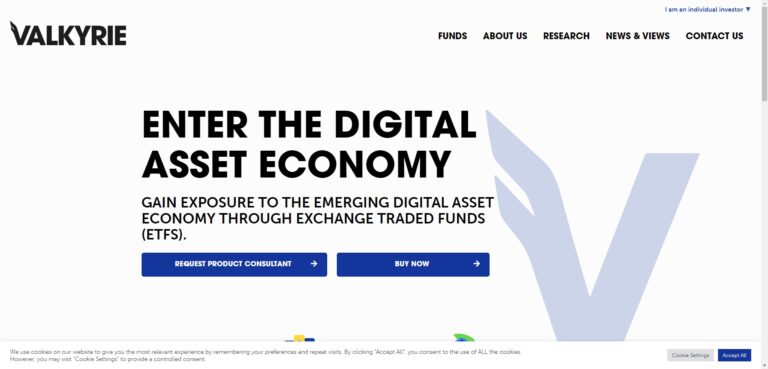
Valkyrie Funds
Valkyrie Funds stands as a prominent financial services firm, uniquely positioned at the convergence of traditional finance and the rapidly evolving digital asset sector. Headquartered in Nashville, our dedicated team seamlessly merges profound technical know-how in blockchain technologies with a proven track record of launching successful investment vehicles within conventional markets.
- Category
- Business » Investing » Cryptocurrencies
More Articles Like: The Birth of the World Wide Web: A Glimpse into CERN’s First Website

Inside Supercomputing: How the World’s Fastest Computers Solve Impossible Problems
Supercomputing sits at the frontier of modern computing, combining immense processing power with advanced architectures to tackle problems far beyond the reach of ordinary machines. From climate modeling to drug discovery, these systems are reshaping science, industry, and national strategy.

News | Headline Links: How Modern Readers Navigate the World One Click at a Time
Headline links are the gateways through which most people discover, judge, and share news online. Understanding how they work reveals a great deal about digital journalism, reader behavior, and the economics of attention.

Science: The Ever-Improving Toolkit for Understanding Reality
Science is a method for building reliable knowledge through observation, testing, and revision. It shapes modern life while continuously refining its own tools, assumptions, and explanations.