
Arts as a Living Language: How Creativity Shapes Culture, Community, and Change
What We Mean When We Say “The Arts”
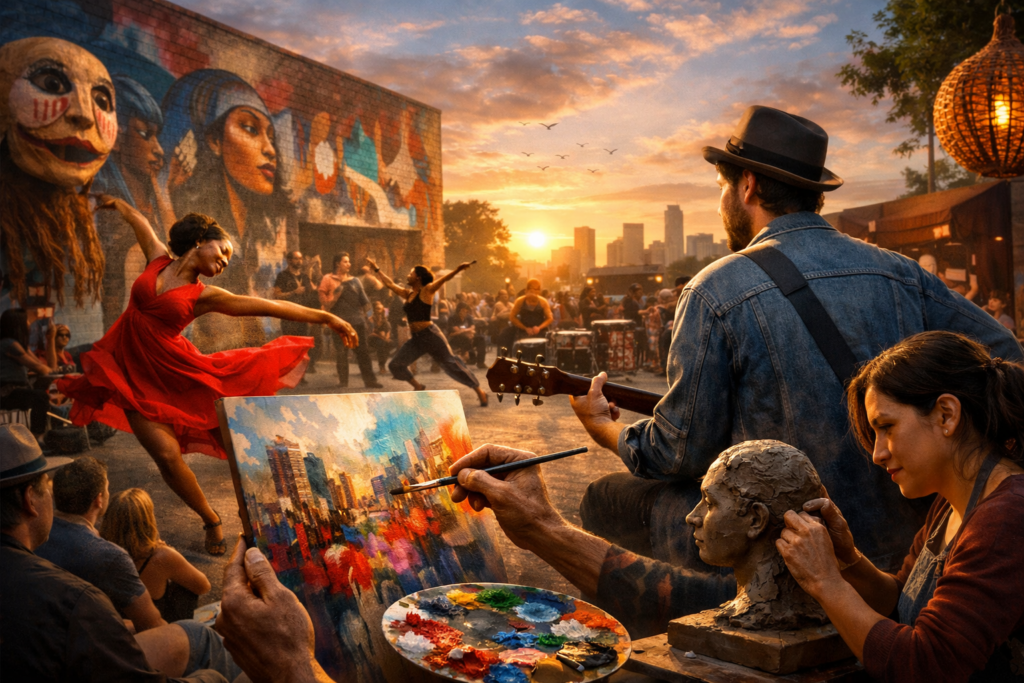
The arts are a broad family of creative practices used to express ideas, emotions, stories, and ways of seeing the world. They include visual arts (painting, sculpture, photography, design), performing arts (theater, dance, music), literary arts (poetry, fiction, spoken word), media arts (film, animation, game art), and craft traditions (textiles, ceramics, woodworking). While categories help us organize, the arts often blend together—consider a film that merges music, writing, acting, and visual composition, or a mural project that combines design, community storytelling, and public performance.
Across cultures and centuries, art has served as a record of what people value and fear, what they celebrate and mourn. Yet the arts are not only historical artifacts. They are active tools that shape how societies think, feel, and relate—especially in moments of change.
Why the Arts Matter: Core Functions in Human Life
1) Expression and meaning-making
Many human experiences are complex, contradictory, or difficult to put into ordinary language. The arts offer alternative vocabularies—color, rhythm, metaphor, movement, composition—making it possible to communicate what might otherwise remain private. A song can hold grief without explaining it; a photograph can reveal tenderness in a split second; a play can stage moral dilemmas that don’t have simple answers.
2) Cultural memory and identity
Art keeps cultural memory alive: myths retold through dance, histories preserved in murals, community values passed down through craft. For individuals, creative work can be a way to explore identity, heritage, and belonging. For communities, shared arts traditions create continuity—especially important for diasporas and groups whose stories have been marginalized.
3) Connection, empathy, and dialogue
The arts build bridges by inviting audiences to inhabit perspectives beyond their own. Reading a novel, watching a documentary, or hearing a live performance can shift assumptions and deepen empathy. Importantly, art can also enable dialogue without forcing consensus: it makes space for complexity, ambiguity, and multiple truths.
4) Critique and civic imagination
Art can challenge power, expose injustice, and ask uncomfortable questions. Satire, protest posters, street theater, and socially engaged installations often function as civic tools—ways for communities to name problems and imagine alternatives. Even when art does not present solutions, it can widen public imagination by showing what is possible, not just what is.
The Creative Process: Skills Hidden in Plain Sight
Art is frequently mistaken as pure talent, but it is largely practice—an iterative process of observation, experimentation, revision, and risk-taking. Whether composing music or designing a poster, artists rely on a core set of transferable skills:
- Attention: close looking and listening, noticing patterns, and detecting subtle differences.
- Craft: learning techniques, tools, and materials—then refining them over time.
- Interpretation: making choices about meaning and how it is communicated to others.
- Iteration: drafting, testing, failing safely, and improving through feedback.
- Collaboration: especially in theater, film, music, and community projects where outcomes depend on shared trust.
These skills matter far beyond galleries and stages. They show up in entrepreneurship, product design, education, healthcare communication, and community leadership—anywhere humans must solve problems with incomplete information and emotional nuance.
Arts in Everyday Life: Beyond Museums and Concert Halls
While institutions play a significant role, the arts are also embedded in daily life. People decorate homes, share playlists, remix videos, cook with aesthetic care, design gardens, and tell stories online. Public arts—murals, memorials, performances in parks—shape how neighborhoods feel and how safe, welcoming, or understood people perceive them to be.
Community arts programs are particularly powerful because they lower barriers to participation. They make creativity available not as a luxury, but as a shared resource. A local theater workshop can build confidence in young people; a quilting circle can reduce isolation; a community photography project can document stories that might otherwise be overlooked.
The Arts and Education: Training the Whole Mind
Arts education is sometimes defended only by its side benefits, such as improving test scores. But the deeper reason it matters is that it teaches ways of thinking that are difficult to cultivate elsewhere. Students learn to give and receive critique, to persist through uncertainty, and to present ideas with clarity and impact.
Strong arts programs also support inclusive learning. Some students who struggle with conventional academic formats find their voice through music, drawing, drama, or digital media. When schools value multiple forms of intelligence—verbal, spatial, kinesthetic, auditory—they create more equitable pathways for students to succeed.
Technology and the Future of the Arts
Technology continually expands what art can be. Digital illustration, music production software, virtual reality experiences, and interactive installations allow creators to work at new scales and with new audiences. Social platforms provide distribution, helping artists reach niche communities across borders.
At the same time, new tools raise new questions. Who owns a digital artwork? How do creators get paid in an era of infinite copying? What happens when algorithms shape what audiences discover? These challenges are not reasons to retreat; they are reasons to build better systems—fair licensing, transparent platforms, and education that helps audiences understand how cultural ecosystems function.
Supporting the Arts: Practical Ways to Sustain Creative Ecosystems
Healthy arts communities depend on many forms of support, not only large donations. Individuals, schools, businesses, and local governments can strengthen arts ecosystems through everyday choices:
- Attend and share: show up for local performances, exhibitions, readings, and screenings.
- Pay for work: buy tickets, subscribe, commission pieces, or purchase from artists directly when possible.
- Protect creative time and space: advocate for studios, rehearsal spaces, libraries, and affordable venues.
- Teach and mentor: pass on skills, especially in communities where access has been limited.
- Integrate arts into public life: support public art, artist residencies, and creative placemaking projects.
Conclusion: The Arts as Infrastructure for Human Flourishing
The arts are not an optional accessory to “real life.” They are part of the infrastructure that helps societies make sense of experience, build empathy, and imagine change. Art teaches us to pay attention, to feel responsibly, and to communicate beyond the limits of ordinary speech. In a world that often rewards speed and certainty, the arts protect a different set of values: curiosity, depth, and the courage to create something that did not exist before.
Listings Related to the Article: Arts as a Living Language: How Creativity Shapes Culture, Community, and Change
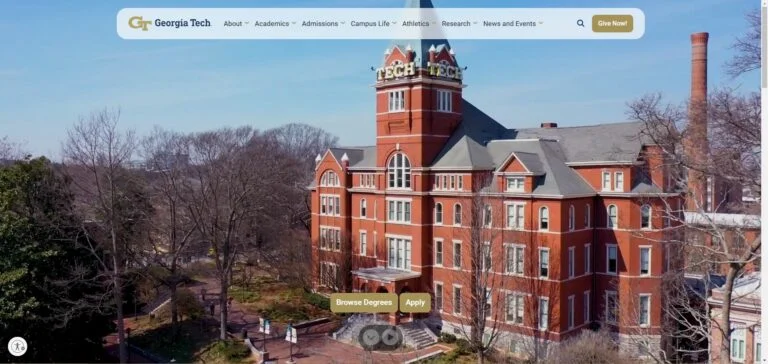
Georgia Institute of Technology
The Georgia Institute of Technology (Georgia Tech) is a leading public research university located in Atlanta, Georgia. Known for its innovative programs in engineering, computing, business, and design, Georgia Tech combines cutting-edge research with a commitment to hands-on learning. With a strong emphasis on technology and entrepreneurship, Georgia Tech prepares students to tackle global challenges and drive innovation across industries.
- Category
- Reference » Education » Colleges and Universities
Domestika
Domestika stands as the premier creative hub, offering online courses instructed by top professionals in the realms of design and creativity. Immerse yourself in learning and collaborative sharing from any location.
Alison
Access free online courses with certification on Alison.com. Join a community of 6 million graduates and enhance your career.
- Category
- Reference » Education » Distance Learning
More Articles Like: Arts as a Living Language: How Creativity Shapes Culture, Community, and Change
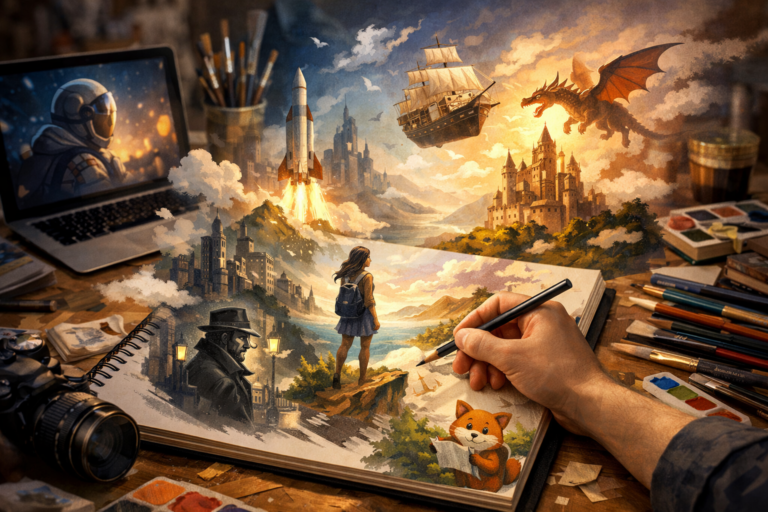
Illustration in Focus: How Visual Storytelling Shapes Art, Media, and Imagination
Illustration is a versatile art form that transforms ideas into engaging visual narratives across books, advertising, editorial media, and digital platforms. Its enduring power lies in its ability to clarify, persuade, and inspire through style, symbolism, and storytelling.
Why Higher Education News Matters More Than Ever
News about colleges and universities shapes how students, families, educators, and policymakers understand the future of higher education. From tuition and technology to research and campus life, the sector remains a critical barometer of social and economic change.

Recreation: Why Leisure Matters for a Healthier, Happier Life
Recreation is more than spare-time fun; it supports physical health, mental balance, social connection, and personal growth. From outdoor adventures to creative hobbies, meaningful recreation helps people recharge and live more fully.