
The Living Web: How Society Forms, Functions, and Transforms
What Society Is—and What It Isn’t
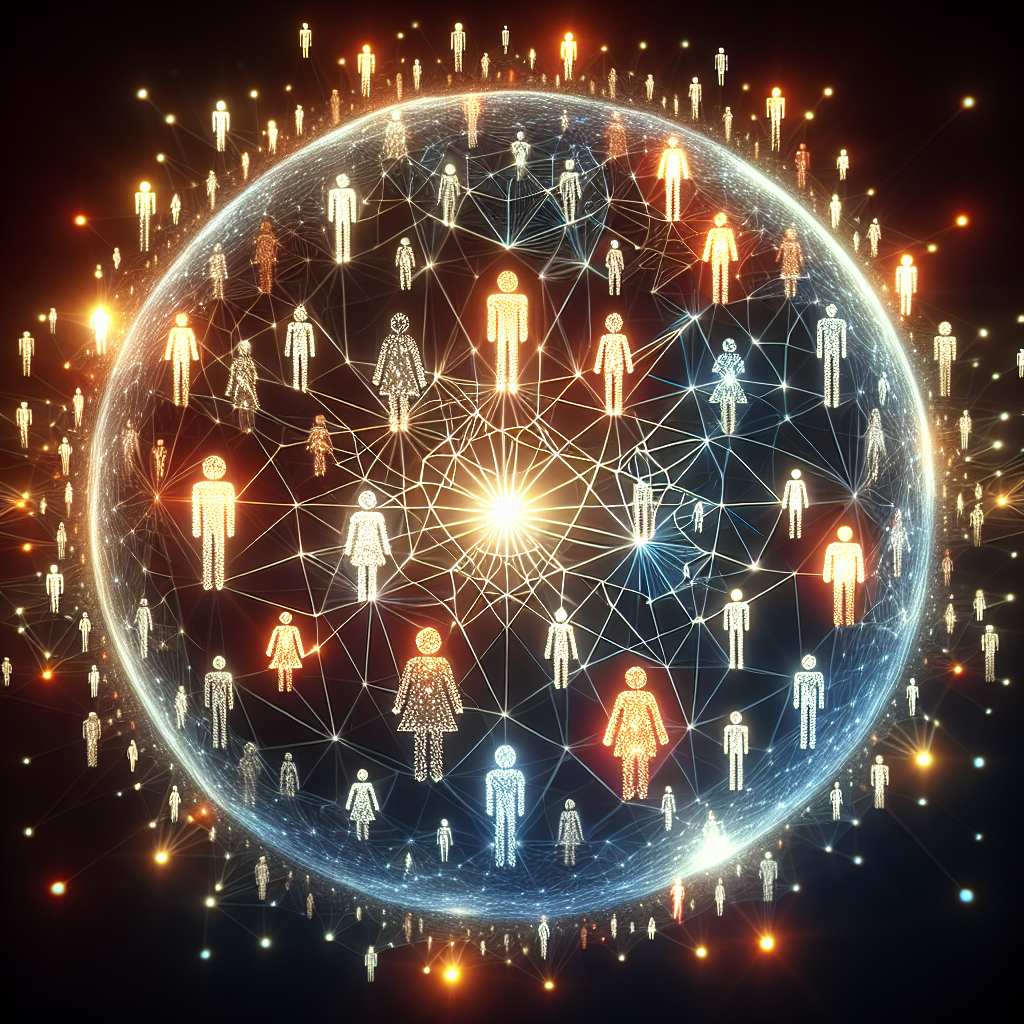
Society is more than a population living in the same place. It is a living web of relationships, norms, institutions, and shared stories that coordinate everyday life. A city’s residents become a society when they recognize obligations and expectations toward one another—formal or informal—such as obeying traffic laws, honoring contracts, caring for children, or showing respect in public spaces.
Society is not the same as culture, though the two overlap. Culture refers to shared symbols, language, customs, and values; society includes culture but also the organized structures that channel behavior—governments, markets, schools, religious organizations, media systems, and families. Likewise, society is not identical to the state: a state is an apparatus of governance, while society includes both those who govern and the broader patterns of life that exist beyond formal politics.
The Building Blocks: Institutions and Social Roles
Institutions are durable patterns of organization that solve recurring social problems. They stabilize expectations, reduce uncertainty, and make large-scale cooperation possible. For example, education systems transmit knowledge and credentials; legal systems define rights and responsibilities; and economic institutions coordinate production and exchange.
How roles guide behavior
Within institutions, people occupy roles—student, parent, manager, voter, neighbor—that come with expectations. Roles are not rigid scripts, but they create “default settings” for interaction. They help strangers cooperate because they define what behavior is appropriate in a given context: how to address a judge, how to queue, how to negotiate a wage, or how to respond during emergencies.
- Families often provide care, emotional support, and early social learning.
- Schools standardize knowledge and sort opportunities through evaluation.
- Markets allocate resources through prices, competition, and contracts.
- States enforce laws, collect taxes, and manage public goods.
- Communities and associations build trust, identity, and mutual aid.
Social Order: Norms, Trust, and Power
Societies hold together through a mix of shared norms and structured power. Norms—unwritten rules about what is acceptable—range from etiquette to moral expectations. They are reinforced by social approval, reputational consequences, and sometimes sanctions. When norms align with people’s lived realities, they can foster trust and cooperation; when they feel hypocritical or coercive, they can spark cynicism and resistance.
Trust as social infrastructure
Trust is an invisible form of social infrastructure. It lowers the “transaction costs” of life: people can share information, lend money, collaborate at work, or follow public health guidance with less fear of exploitation. Trust can be interpersonal (between individuals) or institutional (confidence in courts, elections, science, or journalism). A society with weak institutional trust often compensates through tight in-groups—family networks or patronage—while strangers are treated with suspicion.
Power and inequality
Power determines whose preferences shape rules and whose voices are amplified. It can be overt (laws, policing, military force) or subtle (control of workplaces, media narratives, or professional credentials). Inequality emerges when resources and opportunities—income, education, safety, influence—are distributed unevenly and become self-reinforcing across generations. Many societies struggle to balance incentives for innovation with protections against exclusion and exploitation.
Identity, Belonging, and Social Boundaries
People navigate society through identities: nationality, ethnicity, religion, class, gender, occupation, ideology, and more. Identities provide belonging and meaning, but they also draw boundaries—distinguishing “us” from “them.” These boundaries can support solidarity and collective action, yet they can also harden into prejudice, discrimination, or conflict when groups compete for status and resources.
Healthy societies often cultivate shared civic identities—common commitments to rights, responsibilities, and fair procedures—while still allowing pluralism. When civic identity weakens, polarization may rise as individuals seek security in narrower affiliations.
How Societies Change
Society is dynamic. Change can be gradual, like shifting family structures or evolving workplace norms, or sudden, like revolutions, financial crises, pandemics, or wars. Three forces frequently drive transformation: technology, demography, and ideas.
Technology
New technologies reshape how people communicate, work, and organize. Social media can mobilize movements quickly, but it can also fragment attention and accelerate misinformation. Automation and artificial intelligence can raise productivity while disrupting labor markets, forcing debates about reskilling, social safety nets, and what constitutes meaningful work.
Demography and migration
Age structures, fertility rates, and migration patterns shift the needs of societies. Aging populations increase demand for healthcare and pensions; youth bulges can intensify pressure for jobs and housing. Migration can revitalize economies and enrich culture, but it also tests integration policies and social cohesion if institutions cannot keep pace.
Ideas and social movements
Ideas change what people view as legitimate. Movements for civil rights, labor protections, or gender equality often begin at the margins and, through organizing and persuasion, become mainstream expectations. This highlights a crucial truth: society is not only inherited; it is negotiated.
Contemporary Tensions: Freedom, Solidarity, and Sustainability
Modern societies face recurring tensions. Individual freedom can conflict with collective responsibility, as seen in debates over taxation, public health measures, and regulation. Economic growth can conflict with environmental sustainability, forcing difficult choices about energy systems, consumption, and intergenerational fairness. Meanwhile, globalization connects markets and cultures but can weaken local industries and intensify feelings of dislocation.
- Freedom vs. security: how to protect rights while managing risk and crime.
- Efficiency vs. equity: how to distribute opportunity without stifling initiative.
- Pluralism vs. cohesion: how to embrace diversity while maintaining shared rules.
- Short-term comfort vs. long-term survival: how to respond to climate and resource limits.
What Makes a Society Flourish?
Flourishing societies tend to combine capable institutions with moral commitments that extend beyond narrow self-interest. They invest in education, public health, infrastructure, and fair legal systems. They protect basic rights, encourage participation, and provide pathways for social mobility. Perhaps most importantly, they maintain mechanisms for peaceful disagreement—independent courts, credible elections, free inquiry, and norms of mutual recognition—so that conflict becomes a source of adaptation rather than breakdown.
Society is, at its core, a collective experiment in living together. It is built from everyday choices—how we treat strangers, what we tolerate, what we demand from leaders, and how we share burdens. Understanding society means seeing both its constraints and its possibilities: the structures that shape us and the agency we have to reshape them.
Listings Related to the Article: The Living Web: How Society Forms, Functions, and Transforms

Valkyrie Funds
Valkyrie Funds stands as a prominent financial services firm, uniquely positioned at the convergence of traditional finance and the rapidly evolving digital asset sector. Headquartered in Nashville, our dedicated team seamlessly merges profound technical know-how in blockchain technologies with a proven track record of launching successful investment vehicles within conventional markets.
- Category
- Business » Investing » Cryptocurrencies
Bitbns
Bitbns is a reputable cryptocurrency exchange platform that offers a secure and user-friendly environment for buying, selling, and trading a wide range of cryptocurrencies. With a focus on providing a seamless trading experience, Bitbns features a diverse selection of digital assets, including Bitcoin, Ethereum, and many altcoins, allowing users to diversify their crypto portfolios.
- Category
- Business » Investing » Cryptocurrencies
More Articles Like: The Living Web: How Society Forms, Functions, and Transforms
Law in Everyday Life: How Rules Shape Society and Social Change
Law is more than a system of rules enforced by courts; it is a social institution that reflects values, resolves conflicts, and guides collective life. Understanding the relationship between society and law reveals how rights, duties, and justice evolve over time.

Why Higher Education News Matters More Than Ever
News about colleges and universities shapes how students, families, educators, and policymakers understand the future of higher education. From tuition and technology to research and campus life, the sector remains a critical barometer of social and economic change.

The Living Architecture of Society: How We Build, Belong, and Change Together
Society is more than a population living side by side—it is a living system of relationships, rules, institutions, and shared meanings. This article explores how societies form, how they hold together, and how they evolve under pressure and possibility.